
April 2026 Newsletter
Mosquitofish - tiny mosquito-eating heroes

Sometimes we get confused looks when we talk about mosquitofish....are they mosquitoes that look like fish? ...fish that look like mosquitoes? Neither! Mosquitofish are small fish that LOVE to eat mosquito larvae. This month, Operations Director Casey shares a bit about mosquito fish...
Mosquitofish (Gambusia affinis) are an important part of the District's Integrated Vector Management approach to mosquito control. These fish are not only fun to look at, but they are also the most used biological form of mosquito control in the world. Despite their small stature, each fish can eat up to several hundred mosquito larvae per day.
These fish have a high tolerance for many types of environmental conditions, such as temperature changes, organic pollution, and inconsistent food supply. The district uses mosquitofish primarily in backyard fishponds and unmaintained swimming pools that have become mosquito breeding habitats due to a lack of maintenance.
Once stocked, mosquitofish get to work right away – and their fast reproduction helps keep mosquito larvae in check all season long. These fish do not lay eggs, but instead give birth to fully-developed and very active young, called ‘fry.’ Mosquitofish breed throughout the summer, producing a new brood at monthly intervals. The young are approximately 1/2 inch in total length when born and are immediately ready to begin the work of eating mosquito larvae. Gambusia spp. grow rapidly, reaching a maximum size of about two inches in length.
District staff regularly inspect sites with mosquitofish to make sure the fish are still doing their job, and we have found they are able to survive year after year as long as drift of garden sprays, chlorine, or other chemicals are not introduced.

At our district facilities, Sean – the district’s Mechanic and a certified Vector Control Technician – takes great pride in keeping our mosquitofish healthy and ready for distributing to backyard fishpond and unmaintained swimming pools throughout San Mateo County. Sean maintains 7 large tanks, totaling 2,300 gallons of space for fish to grow and wait to 'go out into the world' to play an important role in mosquito control. We have space for about 15,000 fish!
If you'd like to see our mosquitofish in person, stop by our Open House, where you'll be able to see all the tanks, and maybe see how quickly a mosquitofish will eat a mosquito larva!
West Nile virus season starts

West Nile virus occurs throughout California and is primarily a disease that birds and mosquitoes pass back and forth to each other. However, sometimes a mosquito bite can transmit West Nile virus to a person. While most of us will not get ill from West Nile virus, older individuals and people with compromised immune systems are at risk of becoming very ill from West Nile virus.
Our work during the summer months is particularly focused on reducing the risk of people in San Mateo County getting infected with West Nile virus. One way is through our storm drain catch basin program. Another is through testing dead birds for West Nile virus.
Not all birds that are infected with West Nile virus will get sick, but West Nile virus can make some birds - like crows, ravens, and jays - very sick and even cause death.
(An important note as backyard chicken flocks become popular is that chickens do NOT get ill or die from West Nile virus infection.)
Starting on April 15, the California West Nile Virus Call Center will reactivate their live hotline for calls about dead birds. If a dead bird is reported in San Mateo County, our District will pick it up and test it for West Nile virus. If a bird is positive, we set up mosquito traps around the location the bird was found to determine if there are West Nile virus-positive mosquitoes in the area.
To learn more about West Nile virus, visit https://westnile.ca.gov/
Western treehole mosquitoes - a seasonal pest

We often get calls about pesky day-biting mosquitoes in the spring. If you live in an area with many large trees, these mosquitos are likely western treehole mosquitoes. Learn more about what you can do about these seasonal pests on our western treehole mosquito page.
Open House - save the date
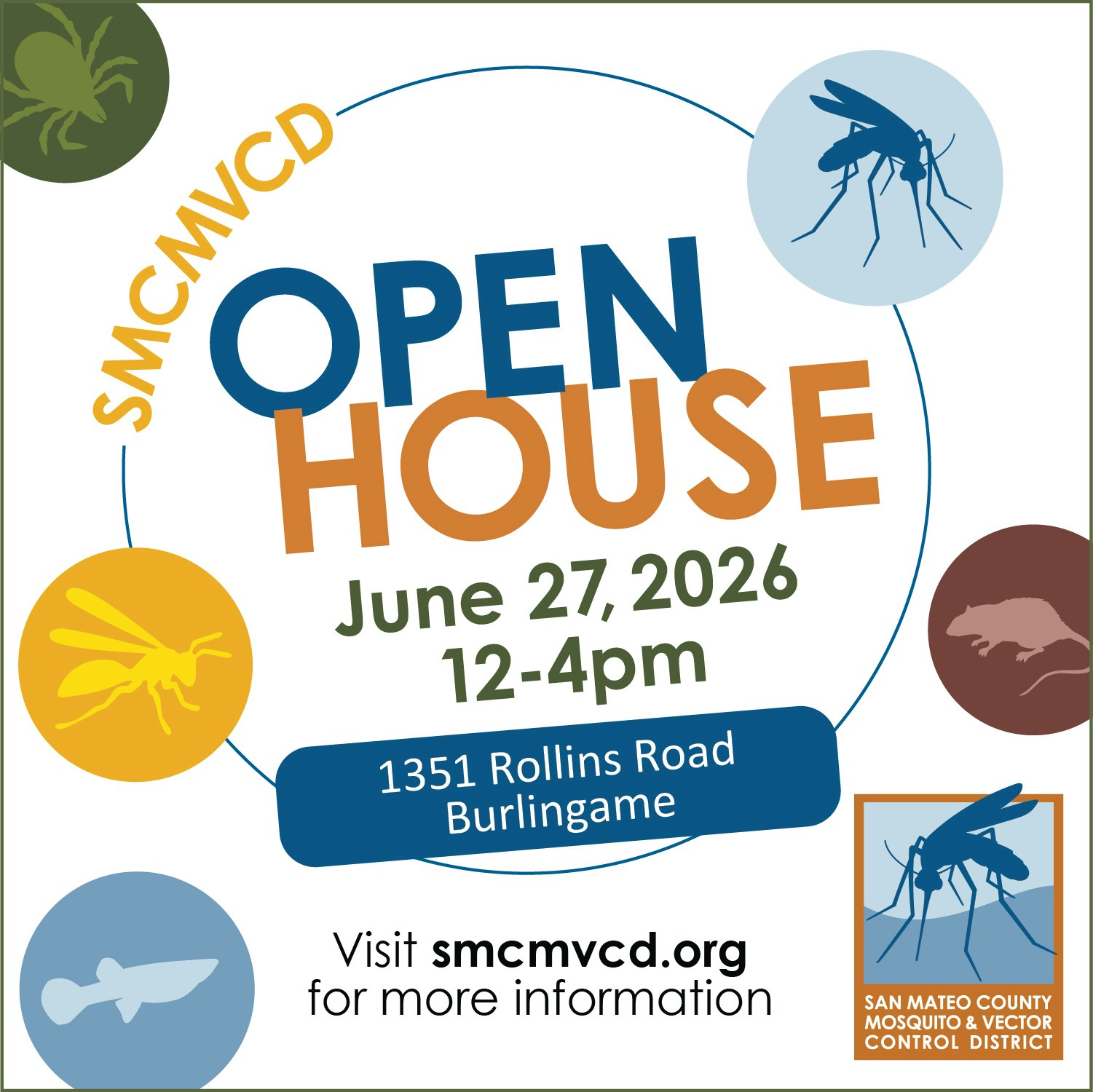
Visit us at our Open House, which will be held Saturday, June 27th from 12-4pm. Our staff will be on-hand to answer questions, display our equipment and insect collection, and offer a variety of hands-on activities for families to enjoy learning about mosquitoes and other vectors. There will be popsicles, face painting, and Beetle Lady's Pop-Up Bug Museum on-site!
Learn more and sign up for updates on our Open House webpage.