Invasive Aedes aegypti mosquitoes found in San Carlos
FOR IMMEDIATE RELEASE
Contact: Rachel Curtis-Robles, PhD
Communications Director
650-344-8592
Invasive Aedes aegypti mosquitoes found in San Carlos
Burlingame, CA (October 14, 2026) - The San Mateo County Mosquito and Vector Control District has detected invasive Aedes aegypti mosquitoes in the White Oaks neighborhood of San Carlos. The District is checking properties in the area to determine how widespread the Aedes aegypti mosquitoes are in the area. Invasive Aedes aegypti mosquitoes have been detected in areas of Redwood City and North Fair Oaks since July of this year.
“Residents in other detection areas – Redwood City and North Fair Oaks – have been very helpful with providing quick and easy access for District staff to check their properties for standing water where mosquitoes can breed. We will be relying on residents’ cooperation in the White Oaks neighborhood as we work to determine how widespread this invasive mosquito is in San Carlos. Please work with our staff to allow property access as swiftly as possible,” said Operations Director Casey Stevenson.
Aedes aegypti are small (about ¼ inch) black and white mosquitoes that bite aggressively during the day. They are an invasive species not native to California, but they have become established throughout the United States, including in many California counties. Aedes aegypti mosquitoes can potentially spread several diseases, including dengue, chikungunya, Zika, and yellow fever. At this time, the risk of Aedes aegypti spreading disease in San Mateo County is very low.
District staff will be doing door-to-door property visits in the neighborhood and nearby areas to find standing water where mosquitoes can grow. District staff will set extra mosquito traps to find invasive Aedes aegypti mosquitoes.
Resident actions are essential to help protect the neighborhood from the Aedes aegypti mosquitoes. The mosquitoes lay their eggs stuck to the walls of items that can hold water, such as saucers under potted plants, bird baths, fountains, toys, old tires, yard drains, and small puddles in many outdoor containers.
“Dump out standing water at least once a week to prevent mosquito breeding in and around your home. Aedes aegypti mosquitoes need only about a teaspoon of water to grow, so check and dump even small water sources to help keep your home mosquito-free,” said Communications Director Rachel Curtis-Robles.
Residents can protect themselves from mosquito bites by doing the following:
- Dump all standing water – indoors and outdoors – at least once a week, including water in vases, flowerpots and saucers, old tires, buckets, pet water dishes, bird baths, and trash cans. Mosquitoes can develop in very small amounts of standing water.
- When outside and mosquitoes are active, use an insect repellent registered with the Environmental Protection Agency. Common ingredients include DEET, picaridin, oil of lemon eucalyptus, and IR3535. Always follow the label instructions.
- Wear long sleeve shirts, long pants, socks, and shoes when mosquitoes are most active.
- Be sure window and door screens are in good condition to prevent mosquitoes from entering your home.
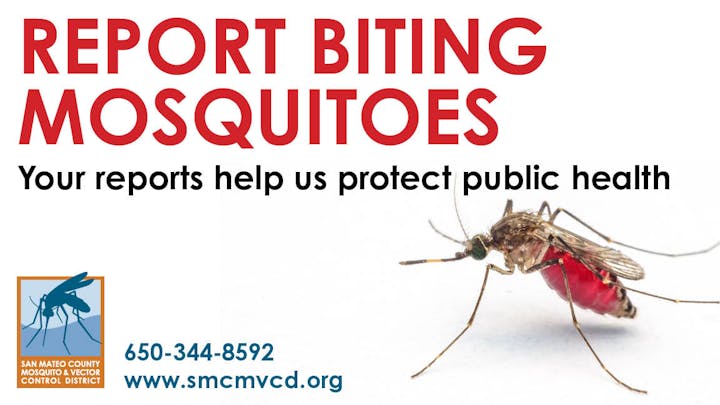
- Report biting mosquitoes to the District at 650-344-8592 or online at https://www.smcmvcd.org/.
For more information about invasive Aedes aegypti and District services, call 650-344-8592 or visit www.smcmvcd.org. The San Mateo County Mosquito and Vector Control District’s programs and services are funded through property taxes and benefit assessments and are provided to all residents in San Mateo County at no additional charge.
###
About the San Mateo County Mosquito & Vector Control District: We are an independent special government district focused on protecting the public health of the residents of San Mateo County through a science-based program of integrated vector management that is responsive to the community. The District delivers specific services to residents and businesses under the guidance of a Board of Trustees comprising representatives from each of the 20 cities in San Mateo County and the County Board of Supervisors